Eye Care
Refractive Lens Exchange
The benefits of modern lens implants, before a cataract ever forms.
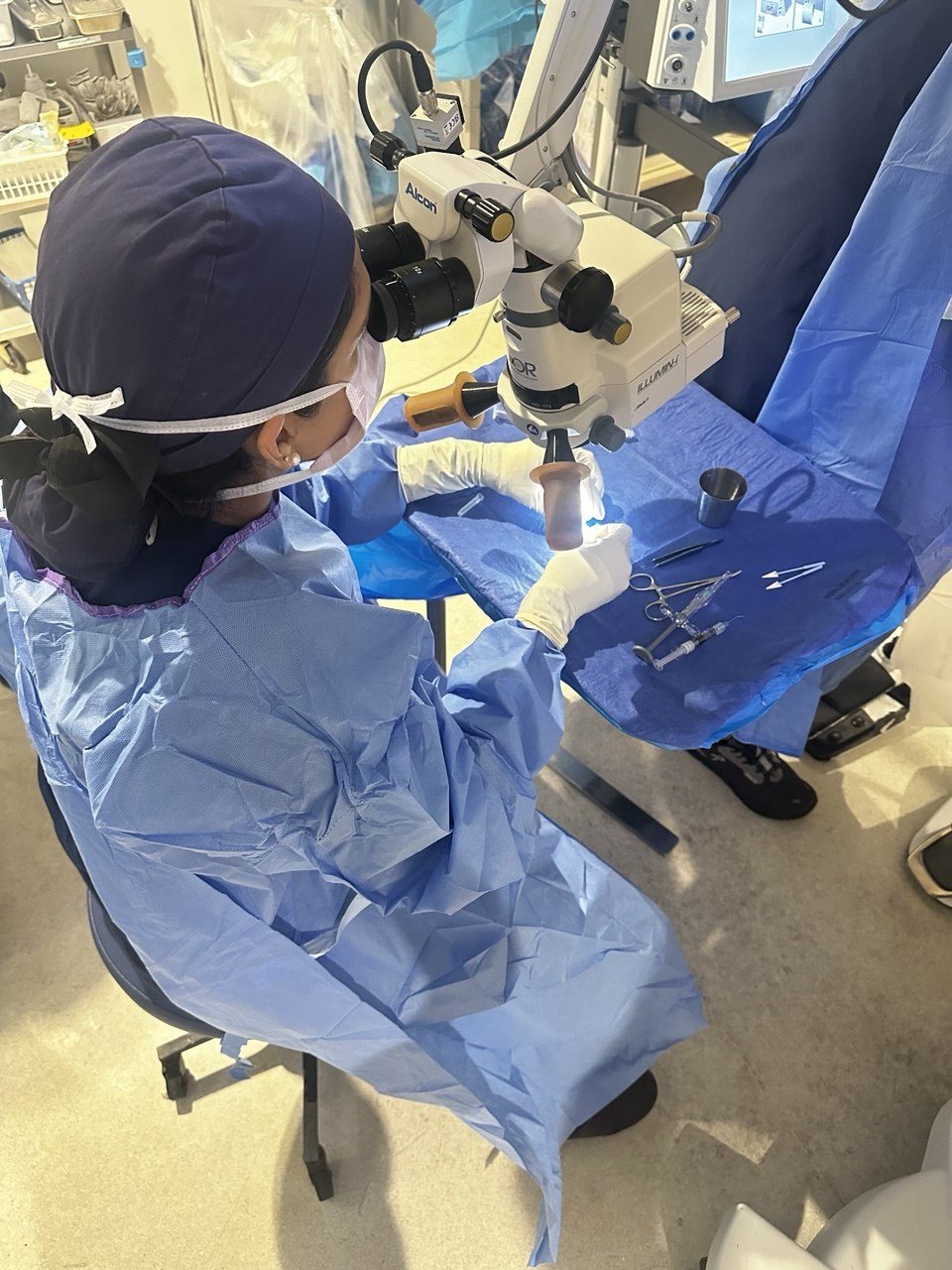
Refractive lens exchange, or RLE, is the same surgery as cataract surgery, done for a different reason. Instead of waiting for the natural lens to become cloudy, we replace it while it is still clear, with an advanced lens implant chosen to correct your vision.
Why the natural lens matters
In our 40s, the lens inside the eye starts to stiffen, and it gets harder to focus up close. That is why so many people reach for reading glasses at this age, even if they always saw well before. Over time, the same lens slowly clouds into a cataract.
RLE addresses both. It corrects your prescription and the need for readers, and because the natural lens is gone, you will never develop a cataract.
Who it can help
- People in their mid-40s and beyond who are tired of reading glasses or bifocals
- People with higher farsightedness, or prescriptions outside the range of LASIK or PRK
- People who are not good candidates for laser vision correction, for example because of thinner corneas
- People who are already starting to show early lens changes
For younger patients with a healthy, flexible lens, options such as LASIK, PRK or the EVO ICL are often the better fit.
Choosing your lens
The same lens options used in cataract surgery are available with RLE, including toric lenses for astigmatism, extended depth of focus and multifocal lenses for a range of vision, and the Light Adjustable Lens, which can be fine-tuned after surgery. Your work, hobbies, night driving and screen time all shape which lens suits you best.
What to expect
The surgery itself usually takes just 4 to 7 minutes per eye, you go home the same day, and most people notice a big change in their vision within days. The two eyes are typically done on separate days.
Like any surgery inside the eye, RLE carries risks, and it is not right for everyone. A thorough evaluation, including detailed measurements and a check of your retina and ocular surface, tells us whether it is a safe and sensible choice for you.
Related: Cataract Surgery · LASIK & PRK · EVO ICL
Want to see me? Visit Where to Find Me for where I currently see patients.
This page shares general information, not personal medical advice. Your own eye doctor can tell you which options are right for you.