Eye Care
Keratoconus
Protecting vision with corneal crosslinking, including epi-on Epioxa.
Keratoconus is a condition in which the cornea gradually thins and bulges into a cone shape. It often starts in the teens or twenties and can make vision blurry and distorted, with prescriptions that keep changing.
Keratoconus is especially close to my heart. It mostly affects children and young adults, and treating it early preserves their vision for the long run, so they can go on to live healthy, active and productive lives.
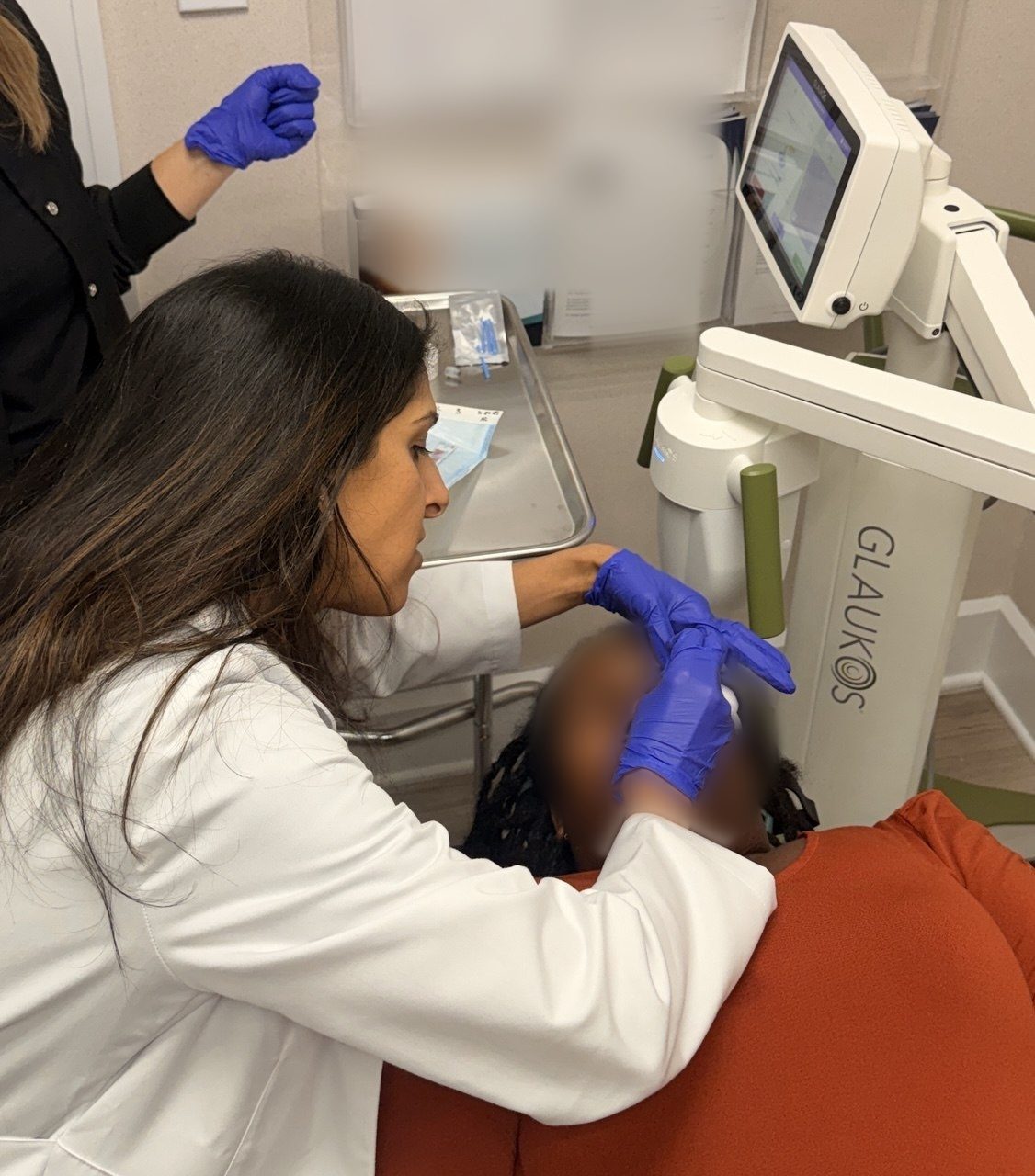
Corneal crosslinking
Crosslinking strengthens the cornea to slow or stop keratoconus from getting worse. It uses riboflavin (vitamin B2) eye drops and a special ultraviolet light to create new bonds in the corneal tissue. Catching it early matters, because crosslinking is designed to protect the vision you have.
- Epi-off crosslinking removes the cornea's thin surface layer first so the drops can soak in.
- Epioxa is a newer "epi-on" treatment that leaves that protective surface layer in place, which can mean a more comfortable recovery.
Seeing clearly with keratoconus
Alongside crosslinking, vision can often be improved with glasses, specialty contact lenses, or in some cases other procedures. In advanced cases, a corneal transplant may be needed.
My crosslinking research has looked at how changes in the cornea after treatment relate to how well patients do.
Want to see me? Visit Where to Find Me for where I currently see patients.
This page shares general information, not personal medical advice. Your own eye doctor can tell you which options are right for you.